I lead product.
I also build it.
An execution-oriented product executive — comfortable from strategy and P&L down to the actual build.

An execution-oriented product executive — comfortable from strategy and P&L down to the actual build.
I'm Samantha — a product executive with fifteen years building B2B platforms, marketplaces, and AI/ML products, from enterprise SaaS to home-healthcare operations at national scale. I've owned P&L, partnered with finance, and led the product, design, operations, and programs behind it — both hands-on and leading a team.
The throughline: find the real problem, decide what to do, and build it. Lately that instinct has followed me home — I'm a parent of two young kids, and I've been building agents to take the mental load off my own plate.
Here's what that looks like ↓
How I operate
Across the whole thing — not just one slice of it.
What I'm building
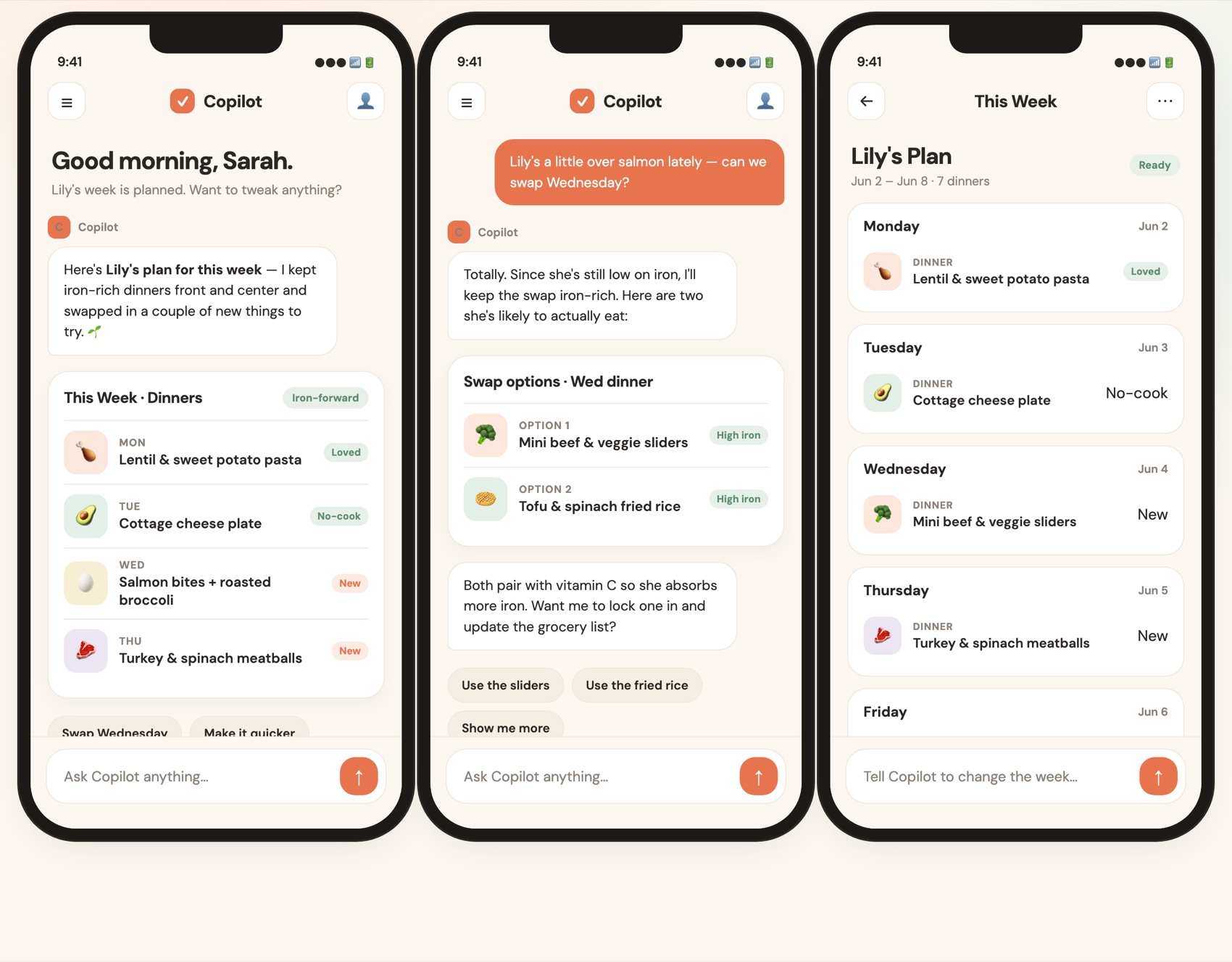
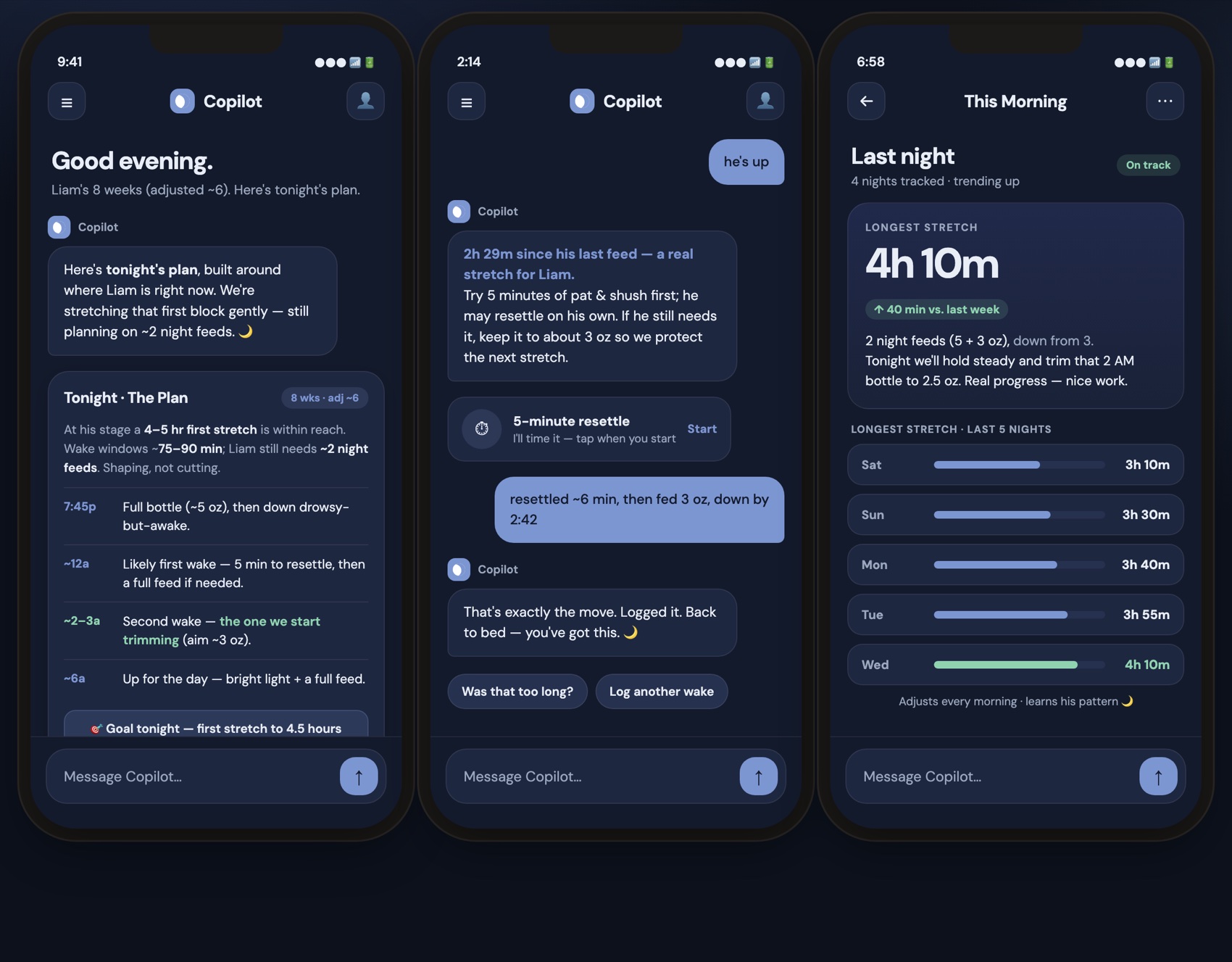
Running a household with two small kids is a sprawling, invisible operations job — the planning, the re-planning, the constant small decisions no one sees. Instead of downloading one more app to manage it, I started building agents to actually handle pieces of it. Two so far, both born from my own day-to-day:
For parents of picky eaters — it learns one child's tastes over time, plans the week around real constraints, and adapts when things change. Built end to end: product, agent design, evals, live testing.
For parents in the newborn fog — it turns scattered night wakings and shifting schedules into a clear nightly plan, and adjusts as the baby grows.
Why it matters. It's the same way I work professionally — find the real problem, decide, build — here pointed at my own family. That I built these for myself is the point, not a footnote.
Tools I've built
I don't just lead AI products — I use them to run my own work. A few of the tools I've built:
The chief of staff I never hired. It preps me for the day, reviews and triages my inbox, pulls the signal out of my meetings, folds my notes into the right place automatically, and drafts and posts on my behalf in Slack — so my attention goes to the decisions, not the overhead.
To build them, I built a small team of specialized agents — a builder, a reviewer, a UX critic — operating under a documented process I designed, with me as the product lead. The leverage isn't "AI writes code"; it's designing the system of work.
Where I've built